




Pattern mixing has a way of sounding more complicated than it is. The idea of putting two prints in one outfit makes a lot of people nervous, so they default to solids all season and save the statement pieces for one-and-done moments. But the trick isn't a formula. It's picking one print to lead and keeping everything else quiet enough to let it.
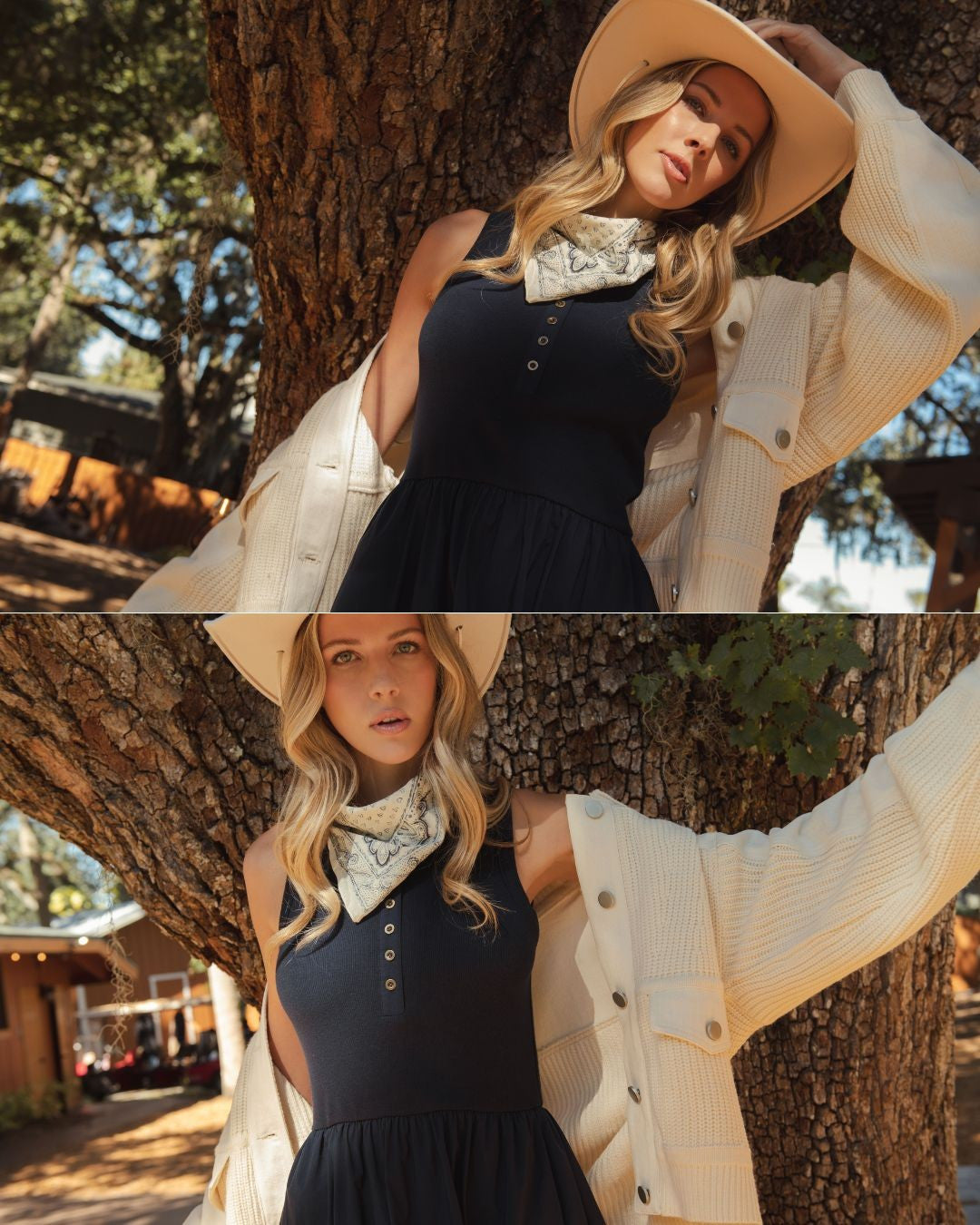
This fall, ELAN's Cowbell Jacket is a good example of a print worth building around. It's a cropped, boxy jacket in heavyweight cotton twill, cut with the same classic details as a denim trucker: a point collar, chest flap pockets, button cuffs, snap closures down the front. What sets it apart is the print itself, an abstract cow pattern in cream, brown, and charcoal that reads as a large-scale, painterly pattern rather than anything literal or costumey. Because the shapes are irregular and the palette is neutral, it behaves more like a textured outerwear piece than a novelty print. Worn open over a plain cream sweater and your regular jeans, it does all the outfit's work without needing anything else to compete with it.

That's the first rule of mixing prints well: let the boldest piece be the whole statement, and build the rest of the outfit in solids or near-solids. The second rule is where it gets more interesting, because a true solid isn't the only way to support a loud print. A tonal, textural pattern can do the same job without reading as a second competing print.
That's exactly what makes the Diamond Jeans such a useful piece to have on hand. They're cut in ELAN's high-rise, wide-leg silhouette with the classic five-pocket construction, but the denim itself is woven in a diamond lattice jacquard, a navy-and-light-blue geometric texture rather than a flat print. Because the pattern stays within one color family, it reads more like a visual texture than a pattern your eye has to work to reconcile with whatever's on top. Worn with a solid sweater or a plain button-down, they add interest without tipping into busy, and they're an easy way to practice pattern mixing if a full-on print jacket still feels like a stretch.

Put the two principles together and pattern mixing stops feeling like a risk. Vary the scale (a large, irregular print against a small, repeating one), keep the palette related (cream, brown, and charcoal link the jacket to just about any neutral underneath, including the blue-grey of the jacquard denim), and never let two prints fight for the same amount of attention in one outfit. If you're mixing the Cowbell Jacket and the Diamond Jeans in the same look, that's genuinely two patterns working together rather than competing, specifically because one is a bold, graphic print and the other is a subtle, tonal weave.
Both pieces are part of ELAN's newest fall arrivals, and both hold up well beyond a single season, the kind of outerwear and denim you reach for through the rest of the fall collection and into next year. If denim with more texture and personality is new territory, ELAN's full range of jeans, pants, and skirts is a good place to see how the rest of the silhouettes compare. And if a cropped, printed jacket feels like a bigger commitment, our guide to styling a jean jacket this fall covers an easier, more neutral entry point into the same category.
Pattern mixing is really just color theory and proportion wearing a more intimidating name, and it's very much in keeping with how ELAN approaches design overall: pieces meant to be worn with confidence rather than overthought. If color pairing feels like more familiar ground to start with, our recent look at what colors to wear this fall, and how to mix them is a natural next step, and the same instinct for building outfits with intention runs through the brand's full history, from its Miami roots to today, which you can read more about on the About ELAN page.


